
RRP Certified Renovator


Lead-Safe Renovations Done Right
As an EPA Certified RRP Renovator, I'm trained and legally required to follow strict lead-safe practices on any home built before 1978. That means EPA-approved testing, proper containment, and safe handling any time lead-based paint is disturbed.
You get immediate test results, clear communication, and the confidence of knowing your home and family are protected by someone who does this by the book.


Why RRP Certification Matters for Homeowners
Lead paint isn't something to panic about, but it's not something to ignore, either. In homes built before 1978, even small repairs can release dust or chips from lead-based paint.
That's why the EPA created specific rules to protect families during renovation work.
As a certified renovator, I'm trained to contain and control that risk. From testing to cleanup, I handle everything on-site, safely, legally, and with care.
No guessing, no passing the buck, no cutting corners.
Want to know if your home has lead paint? If it was built before 1978 and hasn't been tested or renovated, it's worth finding out. I can help with that.
Lead Safe Certified Since 2020
EPA RRP Certification #R-I-99273-20-02281
What is RRP?
RRP stands for Renovation, Repair, and Painting, a federal program regulated by the EPA that requires contractors to follow lead-safe practices when working on homes built before 1978.
Any contractor disturbing painted surfaces in a pre-1978 home is legally required to be trained and certified. I'm an EPA Certified Renovator, trained to identify and manage lead hazards using approved testing methods, proper containment, and safe cleanup procedures
The RRP Rule exists to reduce lead exposure during renovation work in homes and child-occupied buildings, protecting families at every stage of the project.

How I Set Up a Lead-Safe Work Area
Before any renovation involving lead-based paint, the work area gets fully prepared before a single tool comes out. Here's the containment process I follow on every job to keep dust controlled, surfaces protected, and your family safe from start to finish.
Step 1: Pre-Work Evaluation
Every job starts with a walkthrough, both inside and out. I assess the scope of work, identify all access points, and go over the process with the homeowner before containment begins. No surprises, no shortcuts.


Step 2: Interior Containment Setup
Heavy plastic sheeting is run from ceiling to floor and sealed at every edge using painter's tape. Walls, ceiling, trim, all of it. This creates a fully closed barrier that keeps lead dust and debris contained to the work zone and out of the rest of your home.


Step 3: Exterior Containment
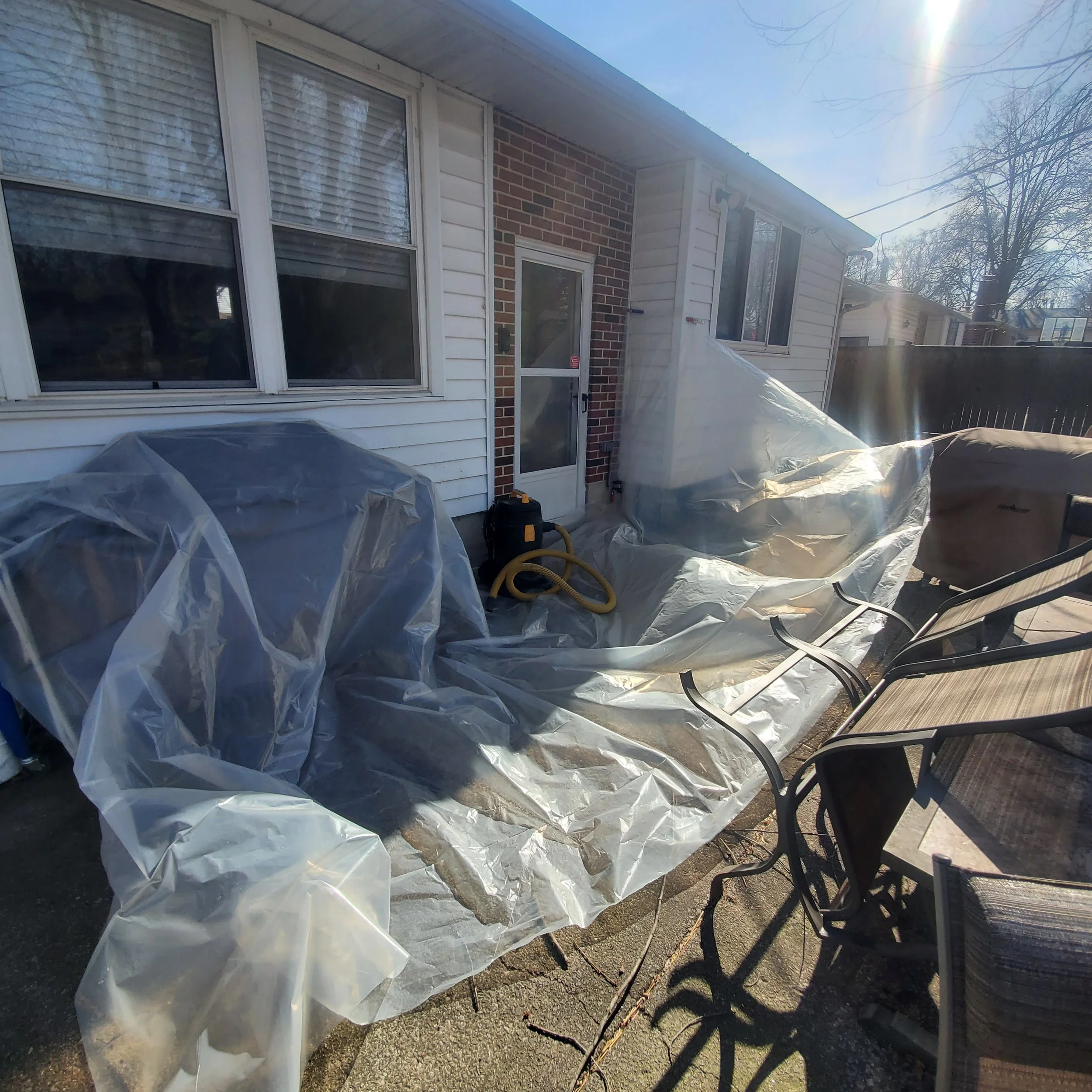
Outside, heavy-duty plastic goes down extending at least 10 feet in every direction from the work area. It's anchored with weights and sealed to the structure so any lead dust or chips that get disturbed stay on the plastic and off your property.
Step 4: Site Signage and Certification
Before work begins, I post a warning sign and display my RRP certification on site. This is an EPA requirement, and it tells anyone nearby that the area is restricted and being handled according to federal safety standards.

Step 5: Safe Work Begins
With containment fully in place, I suit up in the appropriate PPE and get to work. A HEPA vacuum runs continuously during the job to capture dust at the source, and every surface gets a thorough wet-wipe pass before I move to the next stage.

Step 6: Final Cleaning and Inspection
Once the primary work is done, I go back over the entire area by hand using clean white towels. If the towels come back clean, the space is clear. Every surface gets checked before containment comes down. No shortcuts on the back end either.

Step 7: Safe Disposal
All plastic sheeting, contaminated debris, and used materials get bundled tight, sealed with tape, and bagged for EPA-compliant disposal. Nothing gets left on site, nothing goes in the regular trash. Every bit of it is handled according to regulation.

The Finished Results
Once containment is down and the space is verified clean, the finish work gets to speak for itself. Here's how that door project looked after cleanup -- safe, properly installed, and done right.


Want to learn more before reaching out?
Read my blog post on lead paint and what it means for your renovation →
Schedule a Lead-Safe Consultation
Planning a door replacement in a pre-1978 home?
EPA RRP Certified Renovator
Certification #R-I-99273-20-02281